Loading

Broad Institute of MIT and Harvard
The Broad Institute is the genomics powerhouse behind DepMap, cBioPortal co-development, and the Cancer Cell Line Encyclopedia.
Overview
The Broad Institute of MIT and Harvard in Cambridge, Massachusetts, is the genomics research institute behind DepMap, the Cancer Cell Line Encyclopedia, PRISM drug screening and the co-development of cBioPortal; its Cancer Program under Getz and Matthew Meyerson, with Zhang's CRISPR technology, makes it the reference source for functional genomics in cancer. OnCo links it to CRISPR functional genomics and synthetic lethality, to the Cancer Dependency Map and TCGA Pan-Cancer Atlas papers, and to people including Todd R. Golub and Francisca Vazquez. It bears on bottlenecks about preclinical models that do not predict people and undruggable drivers, and on the idea of an open foundation model of the cancer cell trained on perturbation data. Whether cell-line dependencies translate to patients is the open question. The Koch Institute and Wellcome Sanger Institute are its linked partners.
Location
Cambridge, MA, US
Type
research institute
Website
Newsweek 2026 oncology rank
Not in top 300 listing used
OnCo score
#25 · 84 points (0 Newsweek + 0 NCI + 84 from 42 linked objects) · ranking
Research output
From OpenAlex, oncology works in the last five years (2022 to 2026, current year in progress); counted on 2026-10-15.
Matched to Broad Institute, including child institutions. 747 works · 16,976 citations · 73% open access · 4% clinical trials · 3% reviews.
Oncology works per year
1402022
1712023
1632024
1652025
1082026
Most works
- Nir Hacohen74 works
- Genevieve Marie Boland67 works
- Andrew J. Aguirre53 works
- Arnav Mehta49 works
- Catherine J. Wu47 works
- Shuji Ogino45 works
- Gad Getz44 works
- Moshe Sade-Feldman41 works
- Ryan Joseph Sullivan37 works
- Russell William Jenkins37 works
Most cited
Programmes
3- DepMap
- CCLE / PRISM
- Cancer genome analysis
People
11Andrew J. Aguirre
Institute Member, Broad; Physician, Dana-Farber
Pancreatic cancerKRAS biologyOrganoids
Uses organoids and functional genomics to find what pancreatic cancers depend on beyond KRAS.
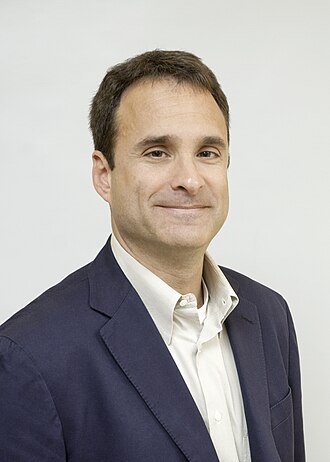
Bradley E. Bernstein
Institute Member, Broad; Chair, Cancer Biology, Dana-Farber
EpigenomicsChromatinGlioma
Bradley Bernstein mapped the chromatin landscapes that let cancer cells switch identities and resist drugs.
Catherine J. Wu
Chief, Division of Stem Cell Transplantation and Cellular Therapies, Dana-Farber Cancer Institute; Professor, Harvard Medical School
Neoantigen vaccinesCancer genomicsCLL evolution
Led the first personalised neoantigen peptide vaccine trial in melanoma and mapped how CLL evolves under treatment.
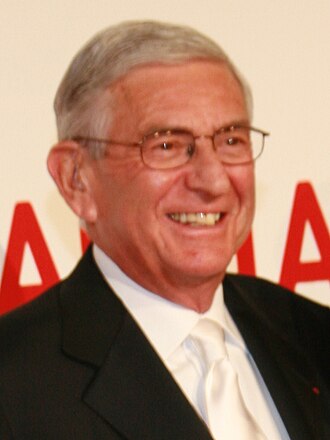
Eli Broad
With Edythe Broad, founder of the Broad Institute of MIT and Harvard
GenomicsInstitute buildingCancer genomics
Eli and Edythe Broad gave $100 million in 2004 to start the Broad Institute and kept giving until their total passed $700 million in 2013; the genomics it produced underpins much of precision oncology.
Faisal Mahmood
Associate Professor of Pathology, Harvard Medical School and Brigham and Women's Hospital; Associate Member, Broad Institute
Computational pathologyPathology foundation modelsMultimodal AI
Built UNI and CONCH, the pathology foundation models that let AI read whole-slide images across cancer types.
Feng Zhang
Core Institute Member, Broad; James and Patricia Poitras Professor of Neuroscience, MIT
CRISPR genome editingMolecular toolsDelivery
Pioneer of CRISPR-Cas9 genome editing in human cells, the tool behind cancer dependency screens and edited cell therapies.
Francisca Vazquez
Director, Cancer Dependency Map (DepMap)
Functional genomicsCRISPR screensCancer dependencies
Francisca Vazquez leads DepMap, the public map of which genes each cancer cell line cannot live without.
Gad Getz
Director, Cancer Genome Computational Analysis; Institute Member
Cancer genome analysisMutational signaturesTumour heterogeneity
Wrote the algorithms (MuTect, MutSig, ABSOLUTE) that most cancer genome studies use to find mutations.
Matthew Meyerson
Director, Center for Cancer Genomics, Dana-Farber; Institute Member, Broad
Lung cancer genomicsEGFR mutationsMicrobiome and cancer
Co-discovered EGFR mutations in lung cancer and linked Fusobacterium to colorectal cancer.
Todd R. Golub
Director, Broad Institute; Charles A. Dana Investigator, Dana-Farber
Cancer genomicsFunctional genomicsPRISM drug screening
Showed that gene expression could classify cancers, then built the Broad into the engine of cancer genomics.
Viktor A. Adalsteinsson
Director, Gerstner Center for Cancer Diagnostics, Broad Institute of MIT and Harvard
Liquid biopsy technologyMinimal residual disease detectionCancer genomics
Engineer who showed low-pass sequencing of blood can replace tumour biopsies and built ultra-sensitive MRD tests.
Key papers
12translationalCancer Discovery 2018302 citations
Real-time genomic characterization of advanced pancreatic cancer to enable precision medicine
Together with COMPASS it made sequencing at diagnosis of advanced disease a standard expectation, and it found the BRAF-deletion class that a hotspot test misses.
basicCell 20182,112 citations
TCGA Pan-Cancer Atlas: 10,000 tumours across 33 cancer types, classified by molecular features
Cancers are defined as much by the tissue they come from as by the mutations they carry, which is why the same drug can work in one organ and fail in another with the same mutation. TCGA is the shared public dataset behind most modern biomarkers and target discovery.
basicCell 20173,166 citations
Defining a Cancer Dependency Map: which genes each cancer cell line cannot live without
DepMap is the lookup table drug hunters use to ask: which cancers would die if we blocked this gene, and how would we recognise them? It generated targets such as WRN and PRMT5-MTAP now in clinical trials, and it is public.
translationalCancer Cell 20171,757 citations
Integrated genomic characterization of pancreatic ductal adenocarcinoma
It is the reference multi-platform dataset and the reason a KRAS wild-type report is treated as a search for another driver rather than as an absence.
basicNature Genetics 20161,001 citations
Distinct patterns of somatic genome alterations in lung adenocarcinomas and squamous cell carcinomas
It is the empirical basis for treating the two histologies as separate diseases for targeted therapy and as one disease for immunotherapy, which is exactly how they are treated.
observationalCell Reports 2016671 citations
Genomic correlates of immune-cell infiltrates in colorectal carcinoma
It is the argument that immune biology matters across the whole disease rather than only in the mismatch repair deficient sixth, and the reason microsatellite-stable tumours with high neoantigen load are still being pursued for immunotherapy.
basicNature 20144,759 citations
Comprehensive molecular profiling of lung adenocarcinoma
It is the reference table the field still argues against, and it made two practical points that outlived it: a tumour with no driver on a standard panel usually has one that the panel did not look for, and pathway activity measured on protein does not follow from the mutation list.
observationalNew England Journal of Medicine 20143,946 citations
Jaiswal: clonal haematopoiesis, the pre-leukaemic clones in most people over 70
Many older people carry blood clones one or two steps from leukaemia, and those clones also drive heart disease through inflammation. CHIP is why blood-based cancer tests must filter out mutations from blood cells, and it opens a route to preventing both leukaemia and cardiovascular events in carriers.
Connected
53Similar pages
- InstitutionDana-Farber Brigham Cancer Center
Shares Break up the liquid droplets where oncogenic transcription happens, Catherine J. Wu, Let patients themselves donate their records and samples for ultra-rare cancers, Genomic correlates of immune-cell infiltrates in colorectal carcinoma.
- TechnologyWhole-exome & whole-genome sequencing
Shares Gad Getz, Pool every multi-sample tumour genome into one open evolution atlas, Catherine J. Wu, Let patients themselves donate their records and samples for ultra-rare cancers.
- IdeaA pre-competitive consortium to validate or kill academic targets before licensing
Shares An open-science consortium on the undruggable drivers, open until a candidate, DepMap (Cancer Dependency Map), CRISPR functional genomics, Preclinical results do not reproduce.
- Key paperDrugging the 'undruggable' cancer targets
Shares Break up the liquid droplets where oncogenic transcription happens, An open map of which cancer proteins any drug can stick to, Attack the backup copy when a tumour has lost the original gene, The undruggable drivers.
- TechnologyAI-driven drug & target discovery
Shares Boltz-1 / Boltz-2 (MIT, open), An open map of which cancer proteins any drug can stick to, Score every model system on how well it predicted real trial results, An open foundation model of the cancer cell trained on perturbation data.
- TechnologyPatient-derived organoids
Shares Pick the laboratory model that matches the patient, not the one to hand, Score every model system on how well it predicted real trial results, An open model of every cancer cell state, built from perturbation atlases, Andrew J. Aguirre.
- IdeaEvery drug screen includes standard reference compounds whose performance is published
Shares DepMap (Cancer Dependency Map), CRISPR functional genomics, Preclinical results do not reproduce, Lab models that fail to predict what happens in patients.
- RoadmapDrug discovery roadmap: screening in mice → maps of dependency → designing in silico
Shares Boltz-1 / Boltz-2 (MIT, open), DepMap (Cancer Dependency Map), Synthetic lethality approaches, CRISPR functional genomics.
technologies
institutions
pathways
ideas
A precompetitive consortium for the twenty hardest cancer targetsAn open atlas of collateral sensitivity for every approved targeted drugAn open foundation model of the cancer cell trained on perturbation dataAn open map of which cancer proteins any drug can stick toAn open model of every cancer cell state, built from perturbation atlasesAn open-science consortium on the undruggable drivers, open until a candidateAttack the backup copy when a tumour has lost the original geneBreak up the liquid droplets where oncogenic transcription happensKill drug-tolerant persisters through ferroptosisLet patients themselves donate their records and samples for ultra-rare cancersPick the laboratory model that matches the patient, not the one to handPool every multi-sample tumour genome into one open evolution atlasScore every model system on how well it predicted real trial results
collections
people
bottlenecks
key papers
Comprehensive genomic characterization of squamous cell lung cancersComprehensive molecular characterization of human colon and rectal cancerComprehensive molecular profiling of lung adenocarcinomaDefining a Cancer Dependency Map: which genes each cancer cell line cannot live withoutDistinct patterns of somatic genome alterations in lung adenocarcinomas and squamous cell carcinomasEGFR mutations in lung cancer: correlation with clinical response to gefitinib therapyGenomic correlates of immune-cell infiltrates in colorectal carcinomaIntegrated genomic characterization of pancreatic ductal adenocarcinomaJaiswal: clonal haematopoiesis, the pre-leukaemic clones in most people over 70Punctuated evolution of prostate cancer genomesReal-time genomic characterization of advanced pancreatic cancer to enable precision medicineTCGA Pan-Cancer Atlas: 10,000 tumours across 33 cancer types, classified by molecular features
Open-source projects
All open source in oncology →Open-source projects that this organisation maintains, from OnCo's own catalogue: licence and last activity as the repository reported them on the day of the fetch. Listing is not endorsement; check the licence before reuse and the validation before clinical use.
The Broad Institute's Genome Analysis Toolkit: variant discovery for germline and somatic DNA, including the Mutect2 somatic caller and copy-number tools most cancer pipelines start from.
Infers large-scale copy-number variation from single-cell RNA-seq to tell tumour cells from normal, from the Trinity CTAT project.
Fusion transcript detection from RNA-seq using STAR chimeric alignments, part of the Trinity CTAT toolkit.
Estimates tumour fraction in cell-free DNA from ultra-low-pass whole-genome sequencing, a workhorse of liquid biopsy research.
The pipelines that process the sequencing behind each DepMap release.
The code behind the Cancer Dependency Map portal, where CRISPR screens and drug sensitivities across cancer cell lines are explored openly.
Sources
Every source this page cites, grouped by who published it. Grouping is read from the web address, not assigned by hand.
broadinstitute.org · 1
A source that has moved or gone is reported by the weekly link check. /audit/
ProvenanceLast edited 2026-09-18 · Jude Gomila · Add Wikipedia links and Wikidata ids for 67 more institut… · diff · file · history
Sourced, not expert-reviewed