Loading
Israel Cancer Research Fund
A US charity, founded in 1975, that funds cancer research by scientists in Israel; grantees' work contributed to Doxil, to Gleevec and to understanding p53.
Also called: Israel Cancer Research Fund IncICRF
Overview
Israel Cancer Research Fund was founded in 1975 by Dr Daniel G. Miller and a group of American and Canadian physicians, scientists and philanthropists to help keep talented scientists in Israel by funding their work, according to its history page. It funds scientists at all career stages across 13 Israeli academic and medical institutions and describes itself as the largest nongovernmental funder of early-stage cancer research in Israel. Its history page credits ICRF-funded researchers with work on p53 as a tumour suppressor (Moshe Oren, 1987), the liposomal chemotherapy Doxil (Alberto Gabizon, 1995) and research that contributed to Gleevec (Eli Canaani, 2001), and says lifetime funding passed $100 million in 2025. The IRS Business Master File lists revenue of about $9 million for the tax year ending December 2024.
Location
New York, NY, US
Type
consortium
Website
Newsweek 2026 oncology rank
Not in top 300 listing used
OnCo score
#1009 · 0 points (0 Newsweek + 0 NCI + 0 from 0 linked objects) · ranking
Programmes
1- Research grants for scientists in Israel, from early career to senior leaders
People
2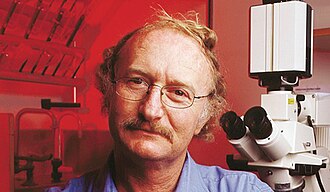
Moshe Oren
Professor, Department of Molecular Cell Biology, Weizmann Institute of Science
p53 biologyMutant p53 gain of functionTumour suppression
Cloned p53 and then spent a career on what it does. The field's first reading of his own 1984 result, that p53 was an oncogene, turned out to be wrong, and the correction is the better story.
Alberto Gabizon
Oncologist, Shaare Zedek Medical Center; professor, Hebrew University-Hadassah Medical School
Liposomal drug deliveryPharmacokinetics of nanomedicinesOvarian and breast cancer
The clinician half of the partnership that turned a liposome chemistry idea into Doxil, and the person who did the trials that showed it behaved differently in patients from free doxorubicin.
Connected
2Sources
Every source this page cites, grouped by who published it. Grouping is read from the web address, not assigned by hand.
icrfonline.org · 2
propublica.org · 1
A source that has moved or gone is reported by the weekly link check. /audit/