Loading

Tata Trusts
India's oldest philanthropic trusts, which built the Tata Memorial Hospital in 1941 and since 2017 have been building a network of 20 cancer hospitals across seven states so that treatment is closer to home.
Also called: Sir Dorabji Tata TrustSir Ratan Tata Trust
Overview
The Sir Dorabji Tata Trust was established in 1932 and, with the Sir Ratan Tata Trust and allied trusts, forms Tata Trusts. The Trusts' own history records the Tata Memorial Centre for Cancer Research and Treatment opening in 1941, called the first large contribution of India to the international fight against cancer. The Tata Medical Center in Kolkata followed in 2012 for eastern and north-eastern India. The Cancer Care Programme launched in 2017 aims to make affordable, high-quality care available closer to patients' homes through a distributed model covering access, quality, affordability, and awareness, early detection and palliative care: a network of 20 hospitals across Andhra Pradesh, Assam, Jharkhand, Maharashtra, Uttar Pradesh, Odisha and Gujarat, and the Assam Cancer Care Foundation, a partnership with the Government of Assam that built a three-level network of two apex centres, twelve district facilities and five day-care centres. The stated aim is to reverse India's 30:70 ratio of early to late detection.
Location
Mumbai, IN
Type
consortium
Website
Newsweek 2026 oncology rank
Not in top 300 listing used
OnCo score
#486 · 8 points (0 Newsweek + 0 NCI + 8 from 4 linked objects) · ranking
Research output
From OpenAlex, oncology works in the last five years (2022 to 2026, current year in progress); counted on 2026-10-15.
Matched to Tata Trusts, including child institutions. 3 works · 102 citations · 100% open access · 33% clinical trials · 0% reviews.
Oncology works per year
02022
12023
02024
22025
02026
Most works
- Partha Sarathi Basu2 works
- Kunal C. Oswal2 works
- Georg Ziniel1 works
- Greig Stanners1 works
- Ruth Campoverde1 works
- Li Zhang1 works
- Jolanta Lissowska1 works
- Constance Glinton-Rolle1 works
- Cindy C Y Law1 works
- Geneva Mireya González1 works
Most cited
| Work | Journal | Year | Citations |
|---|---|---|---|
| CanScreen5, a global repository for breast, cervical and colorectal cancer screening programs 10.1038/s41591-023-02315-6 · open access | Nature Medicine | 2023 | 85 |
| Current Status of Implementation of Cancer Screening Programme in India: A Review of Policies and Practice 10.31557/apjcp.2025.26.4.1117 · open access | Asian Pacific Journal of Cancer Prevention | 2025 | 17 |
| Challenges & recommendations for identification of human epidermal growth factor receptor -2 (HER2)-low metastatic breast cancer in India: Expert opinion statement 10.25259/ijmr_2009_2024 · open access | The Indian Journal of Medical Research | 2025 | 0 |
Programmes
4- Cancer Care Programme (2017)
- Assam Cancer Care Foundation
- Tata Memorial Centre (1941)
- Tata Medical Center, Kolkata (2012)
People
2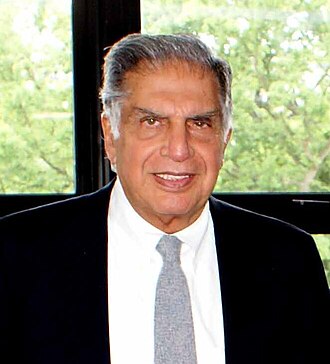
Ratan Tata
Chairman of Tata Trusts, whose cancer care programme is building a network of 20 hospitals across seven Indian states
Distributed cancer careCancer care in IndiaEarly detection
Under his chairmanship Tata Trusts launched a cancer care programme in 2017 to bring affordable treatment closer to home: 20 hospitals across seven states and, with the Assam government, a three-level network of 19 cancer facilities across the north-east.
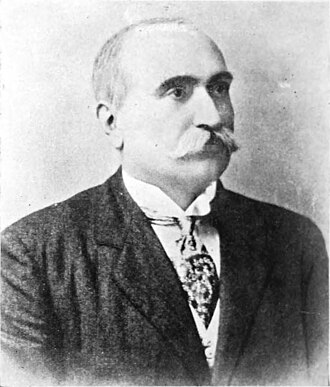
Sir Dorabji Tata
Industrialist whose trust, endowed with his entire fortune, built the Tata Memorial Hospital in 1941
Cancer hospital foundingIndian philanthropy
After his wife Meherbai's illness and death in 1931 he founded the Sir Dorabji Tata Trust in 1932 and left it everything he had; the Trust built Tata Memorial in 1941, called the first large contribution of India to the international fight against cancer.
Connected
8Similar pages
- IdeaNational hub-and-spoke cancer networks with defined referral tiers
Shares Tata Memorial Centre, Fragmented care and guideline gaps, Most of the world has almost no cancer care.
- IdeaCommunity health workers with smartphone AI screen for mouth cancer in South Asia
Shares Tata Memorial Centre, The hardest cancers are found late, Most of the world has almost no cancer care.
- Key paperA National Cancer Grid pooled procurement initiative, India
Shares Tata Memorial Centre, Global access and affordability roadmap: essential medicines and generics → biosimilars and frugal trials → reliance, pooling and homegrown innovation, Most of the world has almost no cancer care.
- IdeaValidate low-cost metronomic oral regimens in phase 3 and carry them into guidelines
Shares Tata Memorial Centre, Global access and affordability roadmap: essential medicines and generics → biosimilars and frugal trials → reliance, pooling and homegrown innovation, Most of the world has almost no cancer care.
- IdeaPublic-sector CAR-T manufacturing in India, Brazil and South Africa under $50,000
Shares Tata Memorial Centre, Global access and affordability roadmap: essential medicines and generics → biosimilars and frugal trials → reliance, pooling and homegrown innovation, Most of the world has almost no cancer care.
- IdeaA legislated, publicly reported 28-day standard from urgent referral to diagnosis
Shares Fragmented care and guideline gaps, The hardest cancers are found late.
- IdeaA platform trial of very-low-cost metronomic chemotherapy in LMIC common cancers
Shares Tata Memorial Centre, Global access and affordability roadmap: essential medicines and generics → biosimilars and frugal trials → reliance, pooling and homegrown innovation, Most of the world has almost no cancer care.
- Key paperHospital-based gallbladder cancer registry from a high-volume referral cancer centre in India: Insights into epidemiology and roadmap for enhancing cancer care
Shares Tata Memorial Centre, The hardest cancers are found late, Most of the world has almost no cancer care.
institutions
roadmaps
people
bottlenecks
Sources
Every source this page cites, grouped by who published it. Grouping is read from the web address, not assigned by hand.
tatatrusts.org · 2
A source that has moved or gone is reported by the weekly link check. /audit/