Loading
Advanced Centre for Treatment, Research and Education in Cancer
The research and development campus of Tata Memorial Centre, where India's first indigenous CAR-T therapy was developed and low-cost trials are designed.
Also called: ACTRECTata Memorial Centre ACTREC
Overview
ACTREC opened in Kharghar, Navi Mumbai, in 2002 as the research wing of Tata Memorial Centre, combining basic science laboratories, a clinical research centre and a hospital that has since expanded into a large cancer hospital with bone marrow transplant, proton and paediatric services. Its scientists, with IIT Bombay and ImmunoACT, developed talicabtagene autoleucel (NexCAR19), India's first approved CD19 CAR-T therapy, and ACTREC hosts the Tata Memorial biobank, genomics and proteomics facilities and the Clinical Research Secretariat that ran the low-dose nivolumab and metronomic chemotherapy trials. The campus also houses the Homi Bhabha National Institute's cancer biology PhD programme and an early-phase trial unit.
Location
Navi Mumbai, IN
Type
research institute · Homi Bhabha National Institute
Website
Newsweek 2026 oncology rank
Not in top 300 listing used
OnCo score
#93 · 40 points (0 Newsweek + 0 NCI + 40 from 20 linked objects) · ranking
Research output
From OpenAlex, oncology works in the last five years (2022 to 2026, current year in progress); counted on 2026-10-15.
Matched to Advanced Centre for Treatment, Research and Education in Cancer, including child institutions. 166 works · 570 citations · 60% open access · 10% clinical trials · 1% reviews.
Oncology works per year
242022
302023
292024
472025
362026
Most works
- Mufaddal Khuzema Kazi15 works
- Atul Madhukar Budukh14 works
- Avanish P Saklani12 works
- Anant Ramaswamy12 works
- Manju Sengar11 works
- Manish Suresh BHANDARE11 works
- Pritha Ray11 works
- Hasmukh Jain10 works
- Rajendra Achyut Badwe10 works
- Rahul Purwar10 works
Most cited
Programmes
4- Indigenous CAR-T (NexCAR19)
- Clinical Research Secretariat
- Cancer biology laboratories
- Bone marrow transplant
People
5Pankaj Chaturvedi
Head and neck surgical oncologist; Director, Centre for Cancer Epidemiology, Tata Memorial Centre
Head and neck surgeryTobacco controlCancer prevention
A surgeon and public-health campaigner whose work links oral cancer to tobacco and drives prevention policy in India.
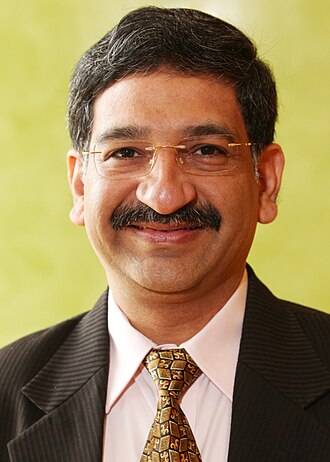
Sudeep Gupta
Director, Tata Memorial Centre; Professor of Medical Oncology
Breast cancerGynaecologic oncologyClinical trials
Sudeep Gupta leads India's largest cancer centre and its programme of pragmatic, affordable trials.
Rajendra Badwe
Former Director, Tata Memorial Centre; breast surgical oncologist
Breast surgerySurgical oncology trialsPerioperative interventions
A surgeon-scientist whose low-cost randomised trials, from peritumoral lidocaine to timing of surgery, challenged assumptions in breast cancer.
Vijay Patil
Professor of Medical Oncology, Tata Memorial Hospital; head and neck oncology
Head and neck cancerLow-dose immunotherapyMetronomic chemotherapy
Showed that very low-dose nivolumab added to cheap chemotherapy improves survival in head and neck cancer, a landmark for affordable immunotherapy.
Kumar Prabhash
Professor and Head, Department of Medical Oncology, Tata Memorial Hospital
Head and neck cancerLung cancerMetronomic chemotherapy
Leads medical oncology at Tata Memorial and its programme of pragmatic trials that make treatments affordable.
Connected
25Similar pages
- PersonRahul Purwar
Shares Indian Institute of Technology Bombay, Point-of-care and decentralised cell manufacturing, ImmunoACT, Talicabtagene autoleucel (NexCAR19) phase 1/2.
- PersonHasmukh Jain
Shares ImmunoACT, Talicabtagene autoleucel (NexCAR19) phase 1/2, Talicabtagene autoleucel, Tata Memorial Centre.
- Key paperTalicabtagene autoleucel for relapsed or refractory B-cell malignancies: an open-label, multicentre, phase 1/2 study
Shares Indian Institute of Technology Bombay, ImmunoACT, Talicabtagene autoleucel (NexCAR19) phase 1/2, Talicabtagene autoleucel.
- PersonGaurav Narula
Shares ImmunoACT, Talicabtagene autoleucel (NexCAR19) phase 1/2, Talicabtagene autoleucel, Tata Memorial Centre.
- Key paperLow-dose immunotherapy in head and neck cancer: a randomised study (Tata Memorial)
Shares Vijay Patil, Kumar Prabhash, Tata Memorial Centre, Nivolumab.
- InstitutionHomi Bhabha Cancer Hospital and Mahamana Pandit Madan Mohan Malaviya Cancer Centre, Varanasi
Shares National Cancer Grid of India, Buccal mucosa and gingivobuccal cancer (oral cancer in India), Global oncology and access in low- and middle-income countries, Tata Memorial Centre.
- IdeaConfirm ultra-low-dose immunotherapy so it can be afforded where most patients live
Shares Vijay Patil, Kumar Prabhash, Tata Memorial Centre, Nivolumab.
- InstitutionTata Medical Center, Kolkata
Shares National Cancer Grid of India, Global oncology and access in low- and middle-income countries, Tata Memorial Centre, Acute lymphoblastic leukaemia.
cancers
fronts
technologies
targets
drugs
ApprovedMonoclonal antibody (anti-PD-1)
Nivolumab · Opdivo / Opdivo Qvantig (SC)
ApprovedCAR-T (CD19, humanised)
Talicabtagene autoleucel · NexCAR19
companies
institutions
trials
people
Sources
Every source this page cites, grouped by who published it. Grouping is read from the web address, not assigned by hand.
actrec.gov.in · 1
ptcog.site · 1
tmc.gov.in · 1
A source that has moved or gone is reported by the weekly link check. /audit/