pioneer
People who opened a field: first treatments, first trials, first movements. 19 records carry it: 19 people.
19 records
| Cancers | Other tags | ||||
|---|---|---|---|---|---|
Bernard Fisher Surgeon whose NSABP trials ended the radical mastectomy and established adjuvant therapy He argued that breast cancer is a systemic disease from early on, then proved in randomised trials that lumpectomy with radiation equals mastectomy and that tamoxifen after surgery, and even before cancer, saves lives. | HR-positive / HER2-negative breast cancer | none | hero | ||
Brian Druker Physician-scientist who brought imatinib to patients with chronic myeloid leukaemia · OHSU Knight Cancer Institute He pushed a shelved kinase inhibitor through the laboratory and into a 1998 trial when few believed a targeted pill could work. Imatinib made chronic myeloid leukaemia a disease people live with, and became the model for targeted therapy. | Chronic myeloid leukaemia | none | hero | ||
Dame Cicely Saunders Founder of the modern hospice movement Nurse, social worker and doctor who opened St Christopher's Hospice in 1967 and established that pain in advanced cancer could be prevented with regular oral morphine and attention to the whole person. | none | none | hero, advocate | ||
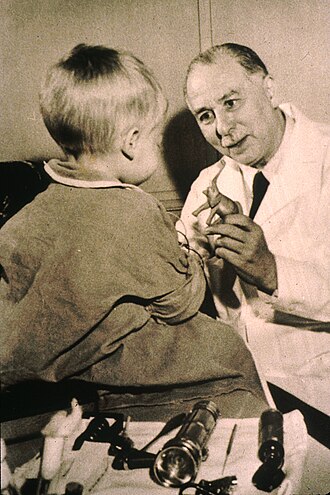
Donald Pinkel First director of St. Jude; devised Total Therapy for childhood leukaemia As the founding director of St. Jude Children's Research Hospital in 1962 he designed Total Therapy, combining drugs with treatment of the brain and spinal fluid, and raised childhood leukaemia cure rates from near zero to about half within a decade. | Acute lymphoblastic leukaemia | none | hero | ||
Elisabeth Kübler-Ross Psychiatrist who made the dying patient's experience a subject of medicine Her 1969 book On Death and Dying, based on interviews with terminally ill patients in a Chicago hospital, made it acceptable for doctors to talk with patients about dying and helped launch the American hospice movement. | none | none | hero, advocate | ||
Emil "Tom" Frei III Pioneer of combination chemotherapy; long-time physician-in-chief of Dana-Farber With Emil Freireich he showed that combinations of drugs could cure childhood leukaemia, then extended the idea to Hodgkin lymphoma and to adjuvant treatment after surgery. | Acute lymphoblastic leukaemia, Hodgkin lymphoma, Osteosarcoma | none | hero | ||
Emil J Freireich Pioneer of combination chemotherapy and the cure of childhood leukaemia At the NCI in the early 1960s he and Emil Frei gave children four drugs at once, VAMP, against fierce opposition, and turned a uniformly fatal leukaemia into a curable one. He also worked out platelet transfusion. | Acute lymphoblastic leukaemia, Acute myeloid leukaemia | none | hero | ||
Gertrude Elion Chemist who designed 6-mercaptopurine and the first rational anticancer drugs Without a doctorate, she and George Hitchings designed drugs to block DNA building blocks. Their 6-mercaptopurine of 1951 remains part of the cure for childhood leukaemia; she won the Nobel Prize in 1988. | Acute lymphoblastic leukaemia | none | hero | ||
Harald zur Hausen Virologist who showed that human papillomavirus causes cervical cancer Against the consensus that herpes was to blame, he proposed in 1976 that papillomaviruses cause cervical cancer and isolated HPV16 and HPV18 from tumours in 1983-84, making vaccination and HPV testing possible. Nobel Prize 2008. | Cervical cancer, Head and neck squamous cell carcinoma, Anal cancer | none | hero | ||
Ian Frazer Immunologist who, with Jian Zhou, created the technology behind the HPV vaccine · The University of Queensland Frazer Institute In 1991 he and Jian Zhou made HPV virus-like particles in the laboratory, the basis of the vaccines that could eliminate cervical cancer. Australia, where the vaccine was rolled out first, is on course to do so. | Cervical cancer | none | hero | ||
Jane Cooke Wright Pioneer of chemotherapy for solid tumours; co-founder of ASCO At Harlem Hospital in the 1950s she showed methotrexate could shrink breast and skin cancers, tested drugs on patients' own tumour cells, and in 1964 was the only woman among the seven founders of ASCO. | none | none | hero | ||
Janet Rowley Geneticist who showed that chromosomal translocations cause cancer Working part-time at her dining-room table in 1972, she showed the Philadelphia chromosome in CML is a swap between chromosomes 9 and 22. Cancer had a genetic cause, and imatinib later hit the fused gene. | Chronic myeloid leukaemia, Acute myeloid leukaemia | none | hero | ||
Jian Zhou Virologist who co-invented the HPV virus-like particle vaccine A Chinese virologist whose skill in expressing viral proteins made the first HPV virus-like particles in 1991. He died in 1999 at 42, seven years before the vaccine reached the public. | Cervical cancer | none | hero | ||
Jimmie Holland Founder of psycho-oncology A psychiatrist who set up the first full-time psychiatry service in a cancer hospital at Memorial Sloan Kettering in 1977, founded the field's societies and journal, and made distress a vital sign in cancer care. | none | none | hero | ||
Judah Folkman Surgeon-scientist who proposed and proved that tumours depend on new blood vessels In 1971 he proposed that tumours cannot grow beyond a few millimetres without recruiting blood vessels, and that blocking them could treat cancer. Dismissed for decades, the idea produced bevacizumab and a class of drugs. | none | none | hero | ||
Mary-Claire King Geneticist who proved inherited breast cancer exists and mapped BRCA1 In 1990 she showed that a single gene on chromosome 17, BRCA1, causes inherited breast and ovarian cancer, when most of the field doubted such a gene existed. Genetic testing and risk-reducing care followed. | Ovarian cancer, Triple-negative breast cancer | none | hero | ||
Sidney Farber Pathologist who produced the first chemotherapy remissions in childhood leukaemia; father of modern chemotherapy In 1947-48 he showed that the folate antagonist aminopterin could send childhood leukaemia into remission, the first drug ever to do so. He then built Dana-Farber and, with Mary Lasker, won the 1971 National Cancer Act. | Acute lymphoblastic leukaemia, Wilms tumour | none | hero | ||
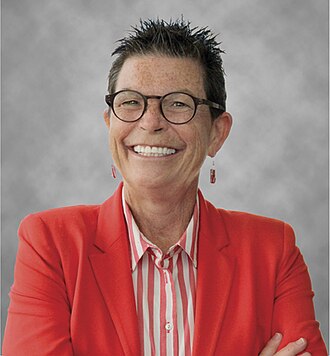
Susan Love Breast surgeon, author and founder of the Army of Women Her Breast Book gave women the information to question their surgeons; she co-founded the National Breast Cancer Coalition and in 2008 recruited hundreds of thousands of women into research through the Army of Women. | Acute myeloid leukaemia | none | hero, advocate, patient | ||
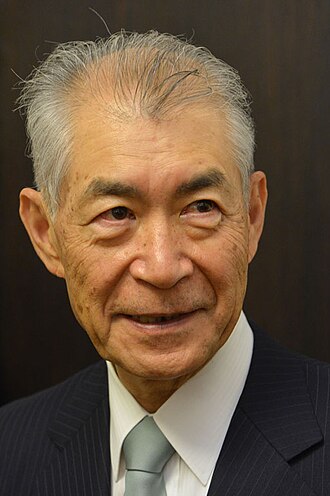
Tasuku Honjo Immunologist who discovered PD-1 and opened the way to anti-PD-1 therapy · Kyoto University Hospital He discovered the PD-1 molecule on T cells in 1992 and showed it acts as a brake on immune attack. Blocking it produced nivolumab and pembrolizumab, now used across dozens of cancers; Nobel Prize 2018. | Melanoma, Non-small-cell lung cancer | none | hero |