Loading
King Faisal Foundation
A Saudi philanthropic foundation whose King Faisal Prize includes a yearly prize for medicine on a set topic; several have gone to cancer research, such as breast cancer, leukaemia, prostate cancer and cancer immunotherapy.
Also called: King Faisal PrizeKing Faisal Prize for MedicineKing Faisal International Prize
Overview
The King Faisal Foundation in Riyadh established the King Faisal Prize in 1977 and first awarded it in 1979. It is given in five categories: Service to Islam, Islamic Studies, Arabic Language and Literature, Medicine and Science. The medicine prize, first awarded in 1982, goes each year to work on a topic the selection committee announces, and the nominee must have published original research on that topic.
Cancer topics on the medicine laureates list include leukaemia (Janet D. Rowley and Melvin F. Greaves, 1988), breast cancer (Axel Ullrich and Umberto Veronesi, 2003), tobacco risks to health (Richard Doll and Richard Peto, 2005), prostate cancer (Patrick C. Walsh and Fernand Labrie, 2007), molecular targeted therapy (Ronald Levy, 2009), immunotherapy for cancer (James P. Allison, 2018) and cellular therapy (Michel Sadelain, 2025). Tak W. Mak was a laureate in molecular immunology in 1995.
Location
Riyadh, SA
Type
consortium
Website
Newsweek 2026 oncology rank
Not in top 300 listing used
OnCo score
#1358 · 0 points (0 Newsweek + 0 NCI + 0 from 0 linked objects) · ranking
Programmes
3- King Faisal Prize for Medicine (first awarded 1982)
- King Faisal Prize for Science
- King Faisal Prize for Service to Islam, Islamic Studies, and Arabic Language and Literature
People
8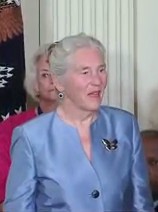
Janet Rowley
Geneticist who showed that chromosomal translocations cause cancer
CytogeneticsLeukaemia geneticsChronic myeloid leukaemia
Working part-time at her dining-room table in 1972, she showed the Philadelphia chromosome in CML is a swap between chromosomes 9 and 22. Cancer had a genetic cause, and imatinib later hit the fused gene.
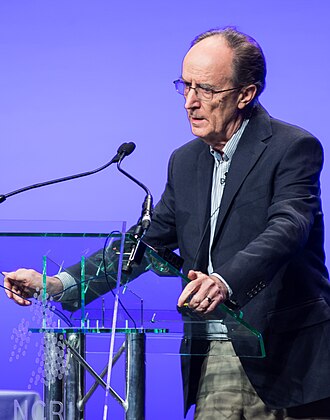
Mel Greaves
Professor of Cell Biology, ICR; Founding Director, Centre for Evolution and Cancer
Cancer evolutionChildhood leukaemiaCancer origins
Showed that childhood leukaemia begins before birth and framed cancer as an evolutionary process.
Umberto Veronesi
Surgical oncologist; scientific director of the Istituto Nazionale dei Tumori, Milan, 1976 to 1994, founder of the European Institute of Oncology, and Italian health minister 2000 to 2001 (died 2016)
Breast cancer surgeryBreast-conserving surgeryCancer prevention
The Milan surgeon whose randomised trial showed that removing a quarter of the breast with radiotherapy was as safe as removing the whole breast and the chest muscles, and who went on to found the European Institute of Oncology and, as health minister, to fund Italy's particle therapy centre.
Sir Richard Peto
Professor of Medical Statistics and Epidemiology, University of Oxford
EpidemiologyTobacco and cancerMeta-analysis
Epidemiologist who quantified how smoking kills and invented the meta-analysis methods that established adjuvant cancer therapy.
Ronald Levy
Robert K. and Helen K. Summy Professor of Medicine (Oncology), Stanford University
LymphomaAntibody therapyIn situ vaccination
Developed the first antibody treatment for cancer, rituximab, and still works on training the immune system against lymphoma.
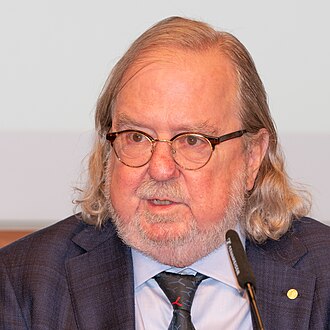
James P. Allison
Chair, Department of Immunology; Director, James P. Allison Institute, MD Anderson
Tumour immunologyImmune checkpoint blockadeT-cell biology
Discovered that blocking CTLA-4 unleashes T cells against cancer, the work behind ipilimumab and the 2018 Nobel Prize.
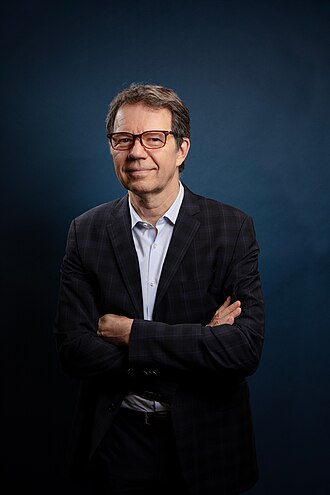
Michel Sadelain
Director, Columbia Initiative in Cell Engineering and Therapy, Columbia University Irving Medical Center
CAR T-cell engineeringGene therapySynthetic immunology
Designed the second-generation CAR with a CD28 costimulatory domain that made CAR-T therapy work.
Tak W. Mak
Senior Scientist, Princess Margaret Cancer Centre; University Professor, University of Toronto
T-cell receptorImmunologyCancer metabolism
Cloned the T-cell receptor and co-discovered CTLA-4's brake function, foundations of modern immunotherapy.
Connected
13Similar pages
- InstitutionNational Foundation for Cancer Research
Shares Tak W. Mak, James P. Allison.
- PersonBrian Druker
Shares Charles Rodolphe Brupbacher Foundation, Janet Rowley, Lasker Foundation.
- PersonPaul Nurse
Shares Pezcoller Foundation, Lasker Foundation.
- InstitutionCancer Research Institute
Shares Tak W. Mak, Michel Sadelain, James P. Allison.
- InstitutionAmerican Association for Cancer Research (AACR)
Shares Ronald Levy, Tak W. Mak, Sir Richard Peto, Pezcoller Foundation.
- PersonBert Vogelstein
Shares Pezcoller Foundation, Charles Rodolphe Brupbacher Foundation.
Sources
Every source this page cites, grouped by who published it. Grouping is read from the web address, not assigned by hand.
kingfaisalprize.org · 2
A source that has moved or gone is reported by the weekly link check. /audit/