Loading
Charles Rodolphe Brupbacher Foundation
A foundation that gives the Charles Rodolphe Brupbacher Prize for Cancer Research every two years to a scientist who has made extraordinary contributions to basic cancer research, with a scientific symposium in Zurich.
Also called: Charles Rodolphe Brupbacher StiftungCharles Rodolphe Brupbacher Prize for Cancer ResearchBrupbacher Prize
Overview
The Charles Rodolphe Brupbacher Foundation was set up by Frédérique Brupbacher in memory of her husband, Charles Rodolphe Brupbacher, who died of cancer; she presided over it until her death in 2015. Its seat is in Vaduz, Liechtenstein, and in scientific matters it works with the University of Zurich and its Medical Faculty.
Every two years it gives the Charles Rodolphe Brupbacher Prize for Cancer Research to a scientist who has made extraordinary contributions to basic oncological research, holds the scientific C. R. Brupbacher Symposium in Zurich, gives up to five Young Investigator Awards and arranges a public lecture in German. Its laureates page lists prizes from 1993 to 2019, beginning with Arnold Levine and David Lane, who lectured on p53; later laureates include Brian Druker (2001), Harald zur Hausen (1999), Richard Peto and Nubia Muñoz (2009), Bert Vogelstein (2011), Irving Weissman (2015), Laurence Zitvogel (2017) and Michael N. Hall (2019). The foundation's site gives no date yet for the 15th symposium.
Location
Vaduz, LI
Type
consortium
Newsweek 2026 oncology rank
Not in top 300 listing used
OnCo score
#1334 · 0 points (0 Newsweek + 0 NCI + 0 from 0 linked objects) · ranking
Programmes
4- Charles Rodolphe Brupbacher Prize for Cancer Research (every two years since 1993)
- C. R. Brupbacher Symposium, Zurich
- Charles Rodolphe Brupbacher Young Investigator Awards
- Public lecture on cancer research
People
8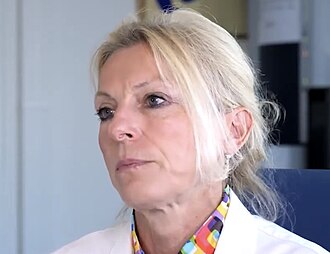
Laurence Zitvogel
Research Director, INSERM U1015, Gustave Roussy
Tumour immunologyGut microbiome and immunotherapyImmunogenic cell death
Immunologist who showed that the gut microbiome shapes responses to immunotherapy and chemotherapy.
Irving L. Weissman
Virginia and D.K. Ludwig Professor; Founding Director, Stanford Institute for Stem Cell Biology and Regenerative Medicine
Stem cell biologyCancer stem cellsInnate immune checkpoints
Isolated the first blood stem cells and discovered the 'don't eat me' signal CD47 on cancer cells.
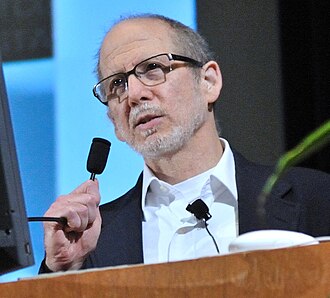
Bert Vogelstein
Clayton Professor of Oncology; Co-Director, Ludwig Center; HHMI Investigator
Cancer geneticsColorectal tumorigenesisLiquid biopsy
Bert Vogelstein is the most-cited scientist in cancer genetics: he mapped how colorectal cancer develops and founded the field of cancer genome sequencing and blood-based detection.
Sir Richard Peto
Professor of Medical Statistics and Epidemiology, University of Oxford
EpidemiologyTobacco and cancerMeta-analysis
Epidemiologist who quantified how smoking kills and invented the meta-analysis methods that established adjuvant cancer therapy.
Nubia Muñoz
Emeritus Professor, National Cancer Institute of Colombia; former Chief of Field and Intervention Studies, IARC
HPV epidemiologyCervical cancer causationCancer prevention
Colombian epidemiologist whose IARC studies proved HPV causes cervical cancer and identified the types the vaccines target.
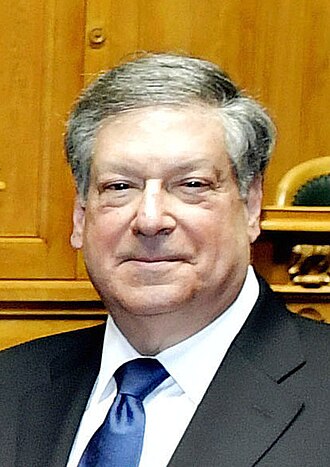
Robert D. Schreiber
Andrew M. and Jane M. Bursky Distinguished Professor; Director, Bursky Center for Human Immunology and Immunotherapy Programs
Cancer immunoeditingNeoantigensInterferon-gamma
Proposed cancer immunoediting and showed neoantigens are the targets of checkpoint immunotherapy.
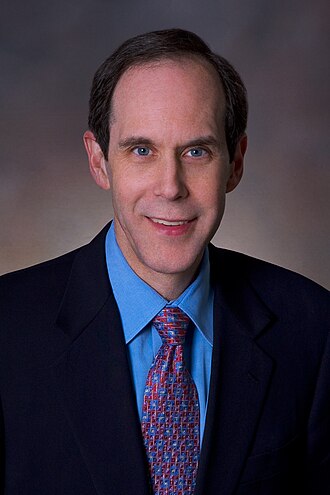
Brian Druker
Physician-scientist who brought imatinib to patients with chronic myeloid leukaemia
Chronic myeloid leukaemiaKinase inhibitorsTargeted therapy
He pushed a shelved kinase inhibitor through the laboratory and into a 1998 trial when few believed a targeted pill could work. Imatinib made chronic myeloid leukaemia a disease people live with, and became the model for targeted therapy.
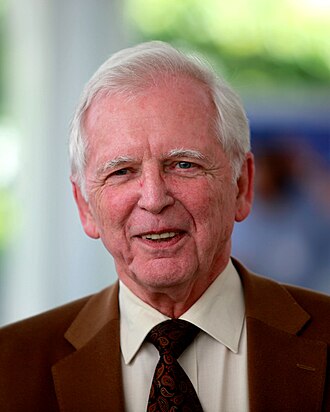
Harald zur Hausen
Virologist who showed that human papillomavirus causes cervical cancer
Tumour virologyHuman papillomavirusCervical cancer
Against the consensus that herpes was to blame, he proposed in 1976 that papillomaviruses cause cervical cancer and isolated HPV16 and HPV18 from tumours in 1983-84, making vaccination and HPV testing possible. Nobel Prize 2008.
Connected
14Similar pages
- PersonJames P. Allison
Shares Royal Swedish Academy of Sciences, King Faisal Foundation, Pezcoller Foundation, Lasker Foundation.
- PersonJanet Rowley
Shares King Faisal Foundation, Brian Druker, Lasker Foundation.
- PersonPaul Nurse
Shares Pezcoller Foundation, Lasker Foundation.
- PersonTak W. Mak
- PersonBill Gates
Shares Harald zur Hausen, Lasker Foundation.
- PersonCharles L. Sawyers
Shares Brian Druker, Lasker Foundation.
- InstitutionCancer Research Institute
Shares Robert D. Schreiber, Harald zur Hausen.
institutions
people
Sources
Every source this page cites, grouped by who published it. Grouping is read from the web address, not assigned by hand.
brupbacher-foundation.org · 2
A source that has moved or gone is reported by the weekly link check. /audit/