Loading
Deutsche Krebsgesellschaft
The German Cancer Society, which with Deutsche Krebshilfe writes the published criteria that a German cancer centre must meet, has them audited on site every year by OnkoZert, and publishes every centre's numbers against them.
Also called: DKGGerman Cancer SocietyOnkoZertNationales Zertifizierungsprogramm KrebsDeutscher KrebspreisErnst-von-Leyden-Preis
Overview
The Deutsche Krebsgesellschaft is the largest scientific oncological society in the German-speaking countries, based in Berlin, and it runs two systems that shape German cancer care more than any guideline elsewhere does. The first is certification. Commissions of about thirty mandated members, drawn from some fifty learned societies, professional bodies and patient organisations, write an Erhebungsbogen per entity setting minimum case numbers per centre and per named surgeon, tumour board frequency and attendance, psycho-oncology and social work staffing, a study participation quota and follow-up rates; OnkoZert, an independent institute in Neu-Ulm, audits centres on site with trained oncologist auditors; a separate committee awards the certificate, which is valid three years with an annual surveillance audit. The first breast centres were certified against a 2003 Erhebungsbogen and entities have been added almost every year since. At 31 December 2025 there were 2,294 certified centres across 2,429 sites, more than 190 of them outside Germany, and certified centres reported 322,486 primary cases for the 2024 data year.
The second is the Leitlinienprogramm Onkologie, which the society runs with the AWMF and Deutsche Krebshilfe, producing 38 S3 guidelines and 36 patient versions. The two are linked: the quality indicators extracted from the guidelines are what the certification audits measure. The WiZen study of AOK claims linked to four cancer registries found lower mortality after first treatment in a certified hospital for most of eleven cancers, though the authors and their critics disagree about how much of that is case volume and case mix.
Read more 1 more paragraphShow less
With its foundation, the Deutsche Krebsstiftung, the society gives the Deutscher Krebspreis each year for work in the German-speaking countries, in equal parts for experimental, translational and clinical cancer research and, since 2025, health services research, each worth 7,500 euros. Its list of laureates begins in 1986 with Harald zur Hausen and Hansjörg Riehm; later laureates include Carsten Bokemeyer (2000), Reinhard Dummer (2003), Dirk Schadendorf and Klaus Pantel (2010), Stefan Pfister (2013), Michael Hallek (2017), Uğur Şahin (2019), Nadia Harbeck (2023) and, in 2026, Marcus Conrad, José Pedro Friedmann Angeli, Jessica Hassel, David Capper, Felix Sahm and Jochen Schmitt. It also gives the Ernst-von-Leyden-Preis for a lifetime of work in oncology, to Wolff Schmiegel in 2025 and Klaus Höffken in 2026.
Location
Berlin, DE
Type
consortium
Website
Newsweek 2026 oncology rank
Not in top 300 listing used
OnCo score
#559 · 8 points (0 Newsweek + 0 NCI + 8 from 4 linked objects) · ranking
Research output
From OpenAlex, oncology works in the last five years (2022 to 2026, current year in progress); counted on 2026-10-29.
Matched to German Cancer Society, including child institutions. 68 works · 839 citations · 63% open access · 7% clinical trials · 7% reviews.
Oncology works per year
142022
82023
212024
132025
122026
Most works
- Christoph Kowalski35 works
- Clara Breidenbach29 works
- Kati Hiltrop17 works
- Nicole Ernstmann16 works
- Sophie Klara Schellack16 works
- Paula Heidkamp15 works
- Johannes Soff11 works
- Lina Heier10 works
- Nora Tabea Sibert10 works
- Simone Wesselmann9 works
Most cited
Programmes
7- Certification of organ cancer centres, oncology centres and modules (with OnkoZert)
- Leitlinienprogramm Onkologie (S3 guidelines, with AWMF and Deutsche Krebshilfe)
- Annual reports of quality indicators per entity
- OncoMap centre directory
- Deutscher Krebskongress
- Deutscher Krebspreis (with the Deutsche Krebsstiftung, since 1986)
- Ernst-von-Leyden-Preis for a lifetime of work
People
22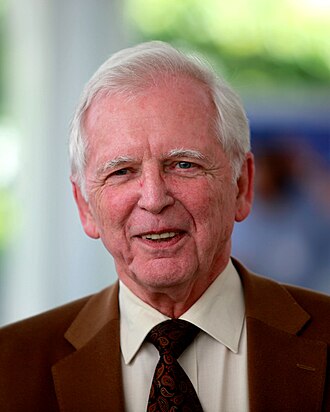
Harald zur Hausen
Virologist who showed that human papillomavirus causes cervical cancer
Tumour virologyHuman papillomavirusCervical cancer
Against the consensus that herpes was to blame, he proposed in 1976 that papillomaviruses cause cervical cancer and isolated HPV16 and HPV18 from tumours in 1983-84, making vaccination and HPV testing possible. Nobel Prize 2008.
Carsten Bokemeyer
Director, Department of Oncology, Hematology and BMT, UKE Hamburg
Testicular cancerColorectal cancerMedical oncology
Medical oncologist known for germ cell tumour research and anti-EGFR trials in colorectal cancer.
Reinhard Dummer
Professor of Dermatology and Vice Chairman, Department of Dermatology, University Hospital Zurich
MelanomaBRAF/MEK targeted therapyOncolytic virus therapy
Swiss dermato-oncologist who led COLUMBUS and the neoadjuvant talimogene laherparepvec studies.
Michael Weller
Chair, Department of Neurology, University Hospital Zurich; Chair, EORTC Brain Tumor Group
Neuro-oncologyGliomaClinical trials
Neuro-oncologist who leads the EORTC Brain Tumor Group and co-authors the European glioma guidelines.
Dirk Schadendorf
Director WTZ Essen; Director, Department of Dermatology
MelanomaSkin cancerImmunotherapy and targeted therapy
Melanoma expert who directs the West German Cancer Center at University Hospital Essen.
Klaus Pantel
Director, Institute of Tumor Biology, UKE Hamburg
Liquid biopsyCirculating tumour cellsMinimal residual disease
Klaus Pantel is a pioneer of circulating tumour cell research and the liquid biopsy field.
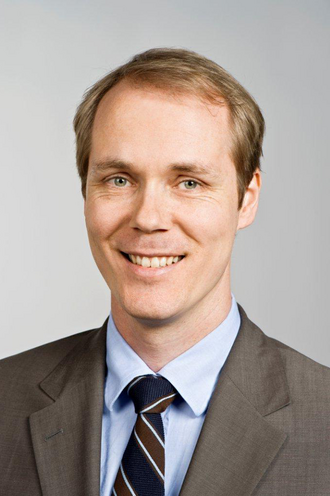
Florian R. Greten
Director, Georg-Speyer-Haus (Institute for Tumor Biology and Experimental Therapy)
Tumour biologyInflammation and cancerColorectal cancer
Tumour biologist known for linking inflammation to cancer, directing the Georg-Speyer-Haus within UCT Frankfurt.
Volker Heinemann
Director, Comprehensive Cancer Center Munich (LMU); Professor of Medical Oncology
Colorectal cancerPancreatic cancerAnti-EGFR therapy
Gastrointestinal oncologist who led FIRE-3, a key trial of cetuximab versus bevacizumab in colorectal cancer.
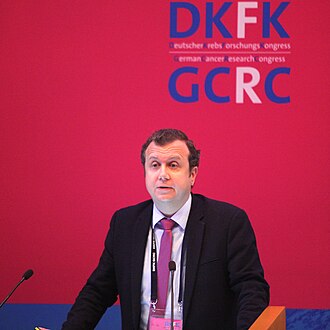
Lars Zender
Deputy Speaker; Medical Director, Internal Medicine VIII (Medical Oncology and Pulmonology)
Medical oncologyLiver cancer biologySenescence and tumour surveillance
Medical oncologist and cancer biologist at Tübingen, known for work on senescence surveillance and functional genomics in liver cancer.
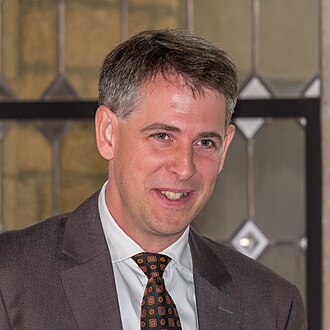
Stefan Pfister
Director, Hopp Children's Cancer Center Heidelberg (KiTZ); Head of Pediatric Neurooncology, DKFZ
Paediatric neuro-oncologyBrain tumour genomicsMolecular classification
Paediatric oncologist whose genomic work redefined childhood brain tumours into molecular subgroups.
Roman Thomas
Director, Department of Translational Genomics, University of Cologne
Cancer genomicsSmall-cell lung cancerLung cancer biology
Roman Thomas is a cancer genomicist who mapped the genomes of small-cell lung cancer.
Andreas von Deimling
Head of Neuropathology, Heidelberg University Hospital and DKFZ
NeuropathologyBrain tumour classificationDNA methylation profiling
Co-created the DNA methylation classifier that changed how brain tumours are diagnosed worldwide.
Stefan S. Bielack
Head of Paediatric Oncology, Klinikum Stuttgart Olgahospital; Chair, Cooperative Osteosarcoma Study Group
OsteosarcomaPaediatric oncologyBone tumours
Leads the COSS group and co-led EURAMOS-1, the largest osteosarcoma trial ever run.
Michael Hallek
Director, Department I of Internal Medicine, University Hospital Cologne; Head, German CLL Study Group
Chronic lymphocytic leukaemiaChemoimmunotherapyTargeted therapy trials
Leads the German CLL Study Group, whose trials (CLL8, CLL14, CLL13) set global standards for CLL treatment.
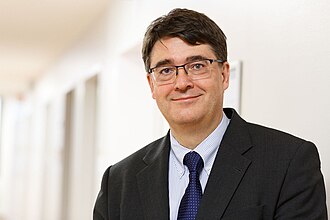
Michael Baumann
Chairman and Scientific Director, German Cancer Research Center (DKFZ)
Radiation oncologyRadiobiologyResearch leadership
Michael Baumann is a radiation oncologist who leads Germany's national cancer research centre.
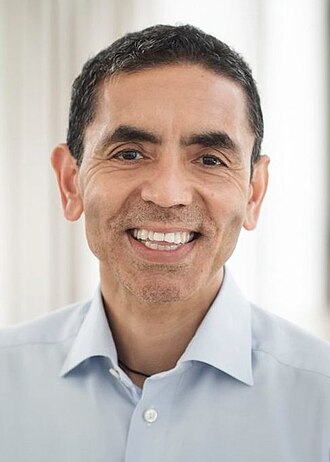
Uğur Şahin
Professor of Translational Oncology, University Medical Center Mainz; Co-founder and CEO, BioNTech
mRNA cancer vaccinesNeoantigen immunotherapyTranslational oncology
Immunologist who built individualised mRNA neoantigen vaccines for cancer, the platform later used for COVID-19.
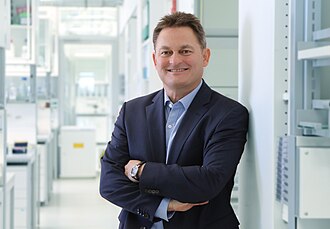
Andreas Trumpp
Head of Stem Cells and Cancer, DKFZ; Managing Director, HI-STEM
Cancer stem cellsMetastasisCirculating tumour cells
Andreas Trumpp is a stem cell biologist studying how dormant cancer cells seed metastases and resist therapy.
Andreas du Bois
Director of Gynecology and Gynecologic Oncology, Kliniken Essen-Mitte; Chair, AGO Study Group
Ovarian cancer surgeryCooperative-group trialsCytoreductive surgery
Surgeon who chairs the German AGO group and led DESKTOP III, proving secondary surgery can extend survival in selected relapsed ovarian cancer.
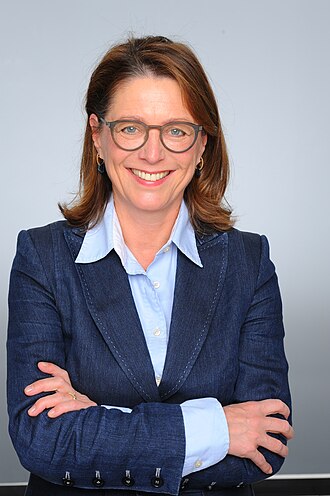
Rita Schmutzler
Präsidentin of the Stiftung Deutsche Krebshilfe (2026-)
Hereditary breast and ovarian cancerGynaecological oncologyCancer prevention
Gynaecological oncologist and hereditary cancer expert who became President of Deutsche Krebshilfe, Germany's largest cancer charity, in 2026.
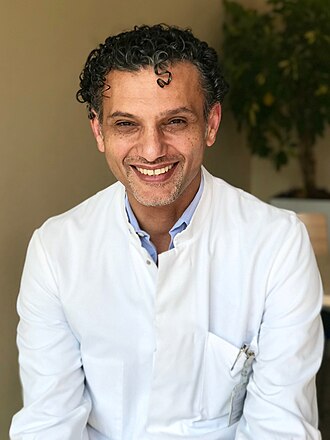
Salah-Eddin Al-Batran
Medical oncologist and trial lead, Krankenhaus Nordwest and Institute of Clinical Cancer Research, Frankfurt
Gastric and oesophageal cancerPerioperative chemotherapyCooperative-group trials
German oncologist who led FLOT4, the trial that made the FLOT chemotherapy regimen the standard before and after surgery for stomach and oesophago-gastric junction cancer.
Nadia Harbeck
Head of the Breast Center, LMU University Hospital Munich; Chair, West German Study Group
Early breast cancerBiomarker-driven de-escalationHER2-positive disease
German breast oncologist whose ADAPT trials use biology to decide who can have less chemotherapy.
Angelika Eggert
Director, Department of Pediatric Oncology and Hematology, Charité
NeuroblastomaPaediatric oncologyTumour biology
Angelika Eggert is a paediatric oncologist and neuroblastoma researcher.
Connected
34Similar pages
- InstitutionDeutsches Netzwerk für Personalisierte Medizin
Shares Lars Zender, NCT/UCC Dresden, University Hospital Carl Gustav Carus, Charité Universitätsmedizin Berlin, Heidelberg University Hospital / NCT / DKFZ.
- InstitutionUniversitätsklinikum Hamburg-Eppendorf
Shares Carsten Bokemeyer, Klaus Pantel, Deutsche Krebshilfe.
- InstitutionUniklinik Köln (CIO)
Shares Roman Thomas, Michael Hallek, Deutsche Krebshilfe, West German Cancer Center (WTZ), University Hospital Essen.
- InstitutionLMU Klinikum München
Shares Nadia Harbeck, Volker Heinemann, Deutsche Krebshilfe.
- InstitutionGerman Cancer Consortium (DKTK)
Shares NCT/UCC Dresden, University Hospital Carl Gustav Carus, West German Cancer Center (WTZ), University Hospital Essen, Charité Universitätsmedizin Berlin, German Cancer Research Center (DKFZ).
- IdeaDevelop drugs in children first when the target is a children's target
Shares Angelika Eggert, Stefan Pfister.
- InstitutionKliniken Essen-Mitte
Shares Andreas du Bois, West German Cancer Center (WTZ), University Hospital Essen.
- Institutionnationales Netzwerk Genomische Medizin Lungenkrebs
Shares Deutsche Krebshilfe, Charité Universitätsmedizin Berlin, German Cancer Research Center (DKFZ).
fronts
institutions
Charité Universitätsmedizin BerlinDeutsche KrebshilfeGemeinsamer Bundesausschuss / IQWiGGerman Cancer Research Center (DKFZ)Heidelberg University Hospital / NCT / DKFZNCT/UCC Dresden, University Hospital Carl Gustav CarusWest German Cancer Center (WTZ), University Hospital EssenZentrum für Krebsregisterdaten am Robert Koch-Institut
terms
people
Andreas du BoisAndreas TrumppAndreas von DeimlingAngelika EggertCarsten BokemeyerDirk SchadendorfFlorian R. GretenHarald zur HausenKlaus PantelLars ZenderMichael BaumannMichael HallekMichael WellerNadia HarbeckReinhard DummerRita SchmutzlerRoman ThomasSalah-Eddin Al-BatranStefan PfisterStefan S. BielackUğur ŞahinVolker Heinemann
bottlenecks
Sources
Every source this page cites, grouped by who published it. Grouping is read from the web address, not assigned by hand.
krebsgesellschaft.de · 3
leitlinienprogramm-onkologie.de · 1
oncomap.de · 1
onkozert.de · 1
Papers and guidelines, by DOI · 1
A source that has moved or gone is reported by the weekly link check. /audit/
ProvenanceLast edited 2026-11-05 · Jude Gomila · The four FDA-approved dog cancer medicines and the Compar… · diff · file
Sourced, not expert-reviewed